


ZYN can affect sperm by increasing abnormality and reducing motility. The current literature on nicotine shows that it hinders the histone-to-protamine process, which is vital for healthy sperm. Furthermore, nicotine pouches have a vasoconstrictor effect, which can reduce blood flow to vital reproductive organs.
Unfortunately, there isn't enough research on ZYN nicotine pouches. Most of the research is centered around the effects of smoking. We gathered the literature and research, and found correlations to help you understand the impacts.
Table Of Contents
How Does ZYN Affect Sperm Count?
Nicotine from ZYNs can inhibit the histone-to-protamine transition in sperm, thereby reducing sperm motility and increasing the number of abnormal sperm. Histone is a protein that packages DNA in a sperm cell. Protamine replaces this soft histone layer through spermiogenesis.
According to an NCBI report, histone retention can cause idiopathic male infertility. Research has concluded that nicotine users have a higher histone concentration in sperm compared to protamine. While this hindrance has been labeled as an effect of cigarettes, nicotine is still the prime instigator.
Hindrance of spermiogenesis creates two problems:
- Sperm Motility Problems: Reduced protamine levels reduce DNA protection, leading to decreased sperm motility. It reduces the likelihood of pregnancy and creates inactive sperm.
- Abnormal Sperms: Increased histone binding to sperm cells can also cause deformed sperm. These are cells that cannot lead to a pregnancy and might even cause problems.
Furthermore, ZYN contains nicotine, which is a vasoconstrictor that can reduce blood flow. Your reproductive system relies on a balanced supply of blood to operate normally. The World Health Organization has frequently recognized nicotine as a reproductive hazard.
Impacts of Nicotine on Fertility
There is limited literature on the risks of smokeless, tobacco-free nicotine products like ZYN. However, nicotine in general has a debilitating effect on sperm quality and quantity. Nicotine is also detrimental to the health of mothers and developing babies.
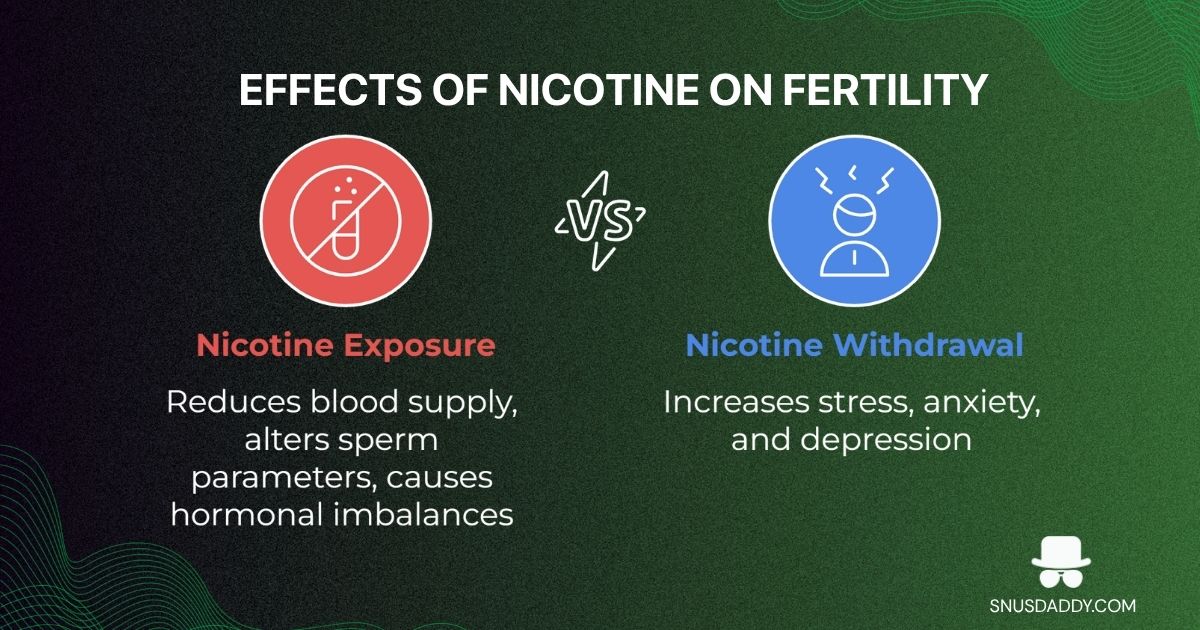
This happens because of three main reasons:
1. Nicotine Reduces Blood Supply
The side effects of nicotine pouches include reduced blood supply to vital organs. This applies to both female and male reproductive organs, which rely on the blood supply to function properly. The current literature states that inhaled nicotine from cigarettes can thin the arteries, which constricts blood flow to the relevant organs.
One common way this manifests is through the shrivelling of the fetus, placenta, and uterus. This makes pregnancy harder and increases pre- and post-birth complications. Male smokers who had greater than 20 pack-years suffer have a higher likelihood of developing premature ejaculation and other organ failures.
Note: A pack-year is equal to the number of years a person has been smoking multiplied by the number of packs smoked per day. For example, if a person smokes 2 packs of cigarettes per day for 10 years, it is equal to 20 pack-years.
2. Altering Sperm Parameters
One notable effect of nicotine on sperm includes morphed sperm cells. Male cigarette smokers have lower sperm motility, and their sperm morphology shows abnormal sperm patterns. Furthermore, consistent cigarette smokers have a higher risk of sperm DNA defects, which can cause various health issues in the fetus and baby.
Cigarettes and other forms of heated nicotine can reduce the ovarian functions of females. It reduces the quality and quantity of the eggs and can also cause early menopause. The effect of inhaled nicotine on sperm characteristics is well documented.
However, there is close to zero research on tobacco-free nicotine pouches. Most of the adverse effects occur because of toxins found in cigarettes. We cannot speculate on the effects of ZYN on sperm structure until there's conclusive research.
3. Hormonal Imbalances
ZYN and any other nicotine product can cause hormonal imbalances. Nicotine is a stimulant that affects your overall mental health and the consequent hormonal shifts. Nicotine reacts with the corticotropin-releasing factor (CRF) in your hypothalamus, which reacts with the HPA Axis to create cortisol.
Cortisol can increase more drastically due to mental stress, anxiety, and depression, which are often symptoms of nicotine withdrawal. According to a 2013 NCBI research, nicotine decreased testosterone and libido levels in male rats. These are two crucial hormones for reproduction.
Nicotine pouch withdrawal can cause anxiety because of its addictive nature. These changes can reduce your motile sperm and the likelihood of initiating pregnancy.
Infertility Risk of ZYN vs Other Nicotine Products
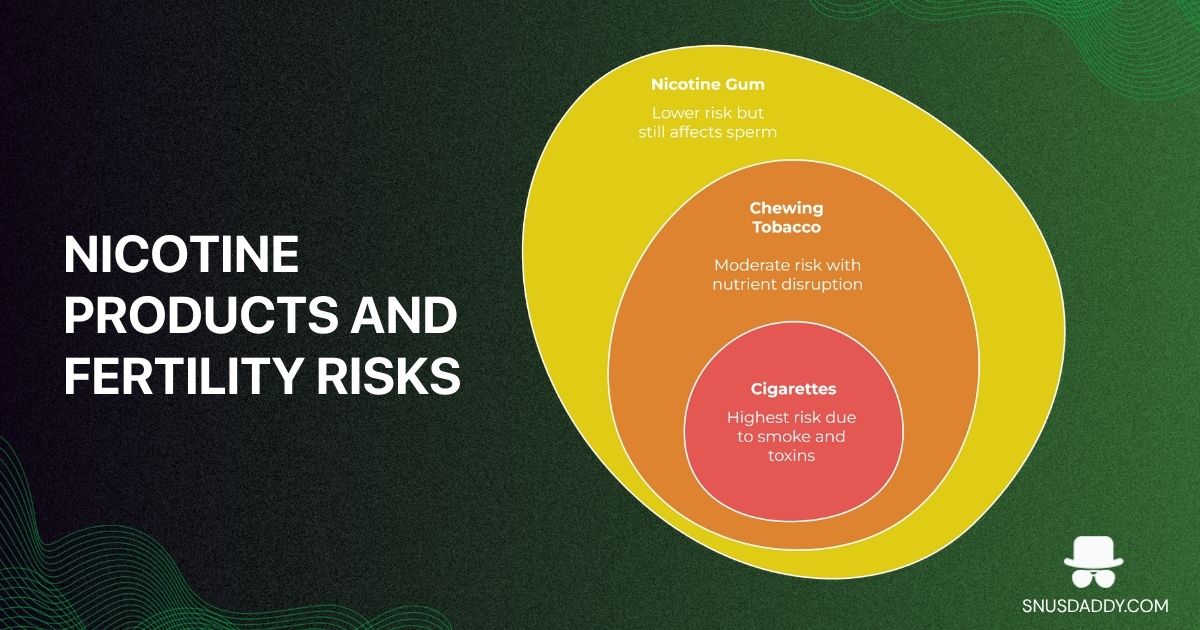
Nicotine comes in different forms, and each one has a varying effect on fertility. Current research shows that the effects of smoking on male fertility are much more dire than tobacco-free nicotine pouches. Let's look at these effects in more detail and find out how each form of nicotine affects your fertility:
Cigarettes and Infertility
Cigarettes can decrease and delay the likelihood of getting pregnant. Furthermore, cigarettes can cause premature childbirth, stillbirth, low birth weight, and other complications. Cigarette smoke increases carbon monoxide and toxin levels while starving the baby.
Cigarettes increase the likelihood of infant mortality and are often attributed to female infertility. An NCBI report states that children exposed to smoke in utero had a 49% reduction in sperm quantity. Briefly, cigarettes can cause generational male infertility.
Cigarettes can also change sperm characteristics, which decreases male fertility. It can cause azoospermia and hinder sperm production by cutting off the blood supply to vital organs. According to a 2015 NCBI Report, people who smoked more than 20 cigarettes per day had a 19% reduction in sperm quantity.
Chewing Tobacco and Infertility
There is a strong correlation between chewing tobacco and male azoospermia. Azoospermia is a condition where the ejaculate doesn't contain enough sperm cells. Chewing tobacco reduces sperm count, which leads to infertility and fewer chances of post-cessation recovery.
Chewing tobacco also reduces nutrient supplies to developing babies, which increases the risk of miscarriages. The liquids from chewing tobacco can disrupt gut microbes, which leads to deficiencies. These deficiencies are passed down to the child, causing complications during pregnancy.
Nicotine Gum and Infertility
Nicotine gum delivers 2 to 4 mg of nicotine per hit, and your body absorbs 60 to 80% of the nicotine. You get the same dose as a cigarette or a nicotine pouch. Naturally, nicotine gum has similar effects on sperm concentration and quality as nicotine pouches and tobacco.
According to research in the World Health Journal for Men, alterations and defects in the protamine transition are closely linked to different forms of nicotine use. Nicotine can damage sperm chromatin, which is the structure that packages the DNA in a sperm cell.
This leads to a bad sperm DNA fragmentation index and detrimental effects on male fertility. It is important to note that these effects are not as severe compared to those exhibited by smokers and vapers.
Age, Nicotine, and Fertility
Nicotine affects fertility, and fertility decreases with age. Naturally, we can infer that the negative effects of nicotine on fertility increase with age. According to a report in the NCBI, sperm morphology decreases by 0.2% to 0.9% per year, and the effect of cigarette smoking can exacerbate this.
This decrease equates to around 4% to 20% over the span of 20 years. According to the same report, sperm motility decreases between 0.17% to 0.6% per year. The decrease in sperm motility is often attributed to a decline in the posttesticular glands of adult males.
The effects of cigarette smoking on sperm are quite evident and can lead to rapid infertility with age. Adults exposed to nicotine might have lower sperm count, weaker male reproductive systems, and sperm DNA damage. While the current literature only highlights the effects of tobacco smoke, these effects could also apply to other forms of nicotine.
FAQs on ZYN and Fertility
Can sperm recover from nicotine?
According to an NCBI Report, there was an increase in epididymal sperm count after nicotine cessation. While research on the subject is limited, nicotine cessation can help sperm recover. With the right diet, lifestyle, and care, you can repair damage to most parts of your body.
Can chewing tobacco affect sperm?
Chewing tobacco can affect sperm health by decreasing sperm motility, morphology, and vitality. Reports in the NCBI have highlighted a strong correlation between Oligoasthenozoospermia or azoospermia and chewing tobacco use in males. Consistent use causes decreased sperm counts and increased chances of infertility.
How long after quitting tobacco will sperm improve?
It takes 90 days for sperm quality to improve after quitting tobacco. The spermatogenesis (sperm maturity process) takes between 64 and 74 days to produce mature, healthy sperm. You'll have much better chances of conceiving 3 months after you quit smoking or using tobacco.
Does nicotine affect erections?
Yes, nicotine can affect erections, leading to erectile dysfunction (ED). Nicotine is a vasoconstrictor that reduces blood supply to vital organs, including the penis. These effects are more common with cigarettes and vapes because of their excess toxicity.
Does nicotine affect libido?
Nicotine was linked to a noticeable decrease in libido and lower sex drive. A double-blind blind, placebo-controlled trial showed a 23% decrease in arousal for people who used nicotine. These tests were carried out to determine the effects of cigarettes on libido, but can be extrapolated to other forms of nicotine.
Bottom Line on Does ZYN Affect Sperm
ZYN contains nicotine, which has been linked to negative effects on sperm quality. Nicotine can affect spermatogenesis and the histone-to-protoamine (spermiogenesis) process. Consequently, these can cause impaired sperm, lower motility, and wider impacts on the sperm chromatin structure.
The negative effects of nicotine on reproductive systems are also well documented for both male and female subjects. The current research is limited to cigarettes and tobacco. However, nicotine is the main constituent and instigator, which means that effects are most likely common to ZYNs.
Nevertheless, ZYNs can affect sperm, though not as severely as cigarettes and vapes. Please use ZYNs responsibly and only as a means to quit smoking. Please let us know what you think about the topic in the comments section below.
