

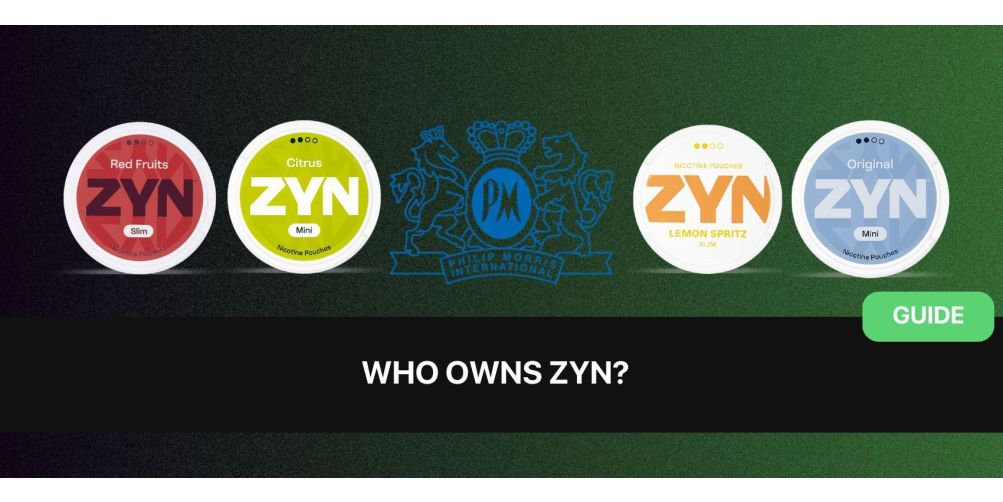
Philip Morris International owns ZYN through Swedish Match, which it bought for $16 billion in November 2022.
That's the quick answer, but if you're curious about what that actually means for the nicotine pouch brand you've been seeing everywhere, there's a lot more to unpack here.
We're talking about how a Swedish company turned ZYN into America's most dominant oral nicotine product, why the world's biggest tobacco giant thought it was worth dropping $16 billion to get its hands on the brand, and what PMI's additional $800 million investment in U.S. production facilities tells us about where ZYN is headed.
That said, let's begin with THE acquisition.
Table Of Contents
The Philip Morris-Swedish Match Acquisition Timeline

Below are the dates leading up to the acquisition and beyond:
- March 2022: PMI announces a $16 billion all-cash offer for Swedish Match. Wall Street analysts immediately start doing the math on ZYN's market share and realize this is as much as owning the entire smoke-free future than just buying a nicotine pouch company.
- May 2022: Swedish Match shareholders approve the deal with over 90% acceptance. Turns out when someone offers you $16 billion, most people say yes pretty quickly.
- October 2022: The U.S. Federal Trade Commission gives its blessing, which is never a guarantee when you're talking about tobacco products and market consolidation.
- November 11, 2022: The acquisition officially closes. Philip Morris International now owns Swedish Match, ZYN, and everything that comes with it.
- Q1 2023: PMI announces an additional $800 million U.S. manufacturing expansion specifically for ZYN production. This wasn't part of the original deal, mind you. They bought the company and immediately started throwing more money at it.
- January 2025: Twenty ZYN products receive FDA PMTA authorization, which is basically the government's way of saying "yes, you can keep selling these nicotine pouches legally."
Why Philip Morris Wanted Swedish Match
Swedish Match launched ZYN in 2014, giving it first-mover advantage in the U.S. nicotine pouch category before most Americans even knew what a nicotine pouch was. The brand established distribution in 100,000+ retail locations bringing its Scandinavian tobacco expertise to the table, particularly in smokeless products and traditional Swedish snus. This was before competitors realized this was going to be a massive market, and by then, ZYN had already become the household name.
ZYN offers the widest product range with 15+ flavors across 4 nicotine strengths (3mg, 6mg, 9mg, 11mg), compared to competitors' more limited selections that frankly look kind of sad sitting next to ZYN on store shelves.
Understanding ZYN vs traditional dip tobacco helps explain why consumers are switching to nicotine pouches in the first place, and once they make that switch, they're overwhelmingly choosing ZYN over everything else on the market.
ZYN's success allowed the brand to generate approximately $2 billion in annual revenue (woof) at the time of acquisition, with projected 30%+ annual growth rates (double woof) that made it one of the fastest-growing nicotine product brands in the world.
Most importantly, ZYN controlled a frankly absurd 70% market share. For comparison, the next closest competitor, VELO (owned by British American Tobacco), holds only 12% market share, while Altria's On! brand captures 8%. In the words of Charlie Sheen, "Winning!" (sorry for the dated reference).
These reasons make the acquisition a slam dunk as it gave PMI immediate leadership in the U.S. oral nicotine pouch market. It also aligned perfectly with PMI's stated goal of becoming a smoke-free tobacco company.
Who Runs ZYN? Leadership Structure & Management
So who's actually calling the shots now that Philip Morris International owns ZYN? It's not as straightforward as you might think, and honestly, that's probably a good thing for anyone who likes their nicotine pouches exactly the way they are.
Corporate Hierarchy
Philip Morris International (NYSE: PM)
 └── Swedish Match AB (subsidiary)
 └── ZYN Brand
Think of it like this: Philip Morris International is the parent company sitting at the top with all the money and global distribution networks, Swedish Match is the subsidiary that actually knows how to make great oral nicotine products, and ZYN is the golden child brand that everyone's betting on.
Key Leadership
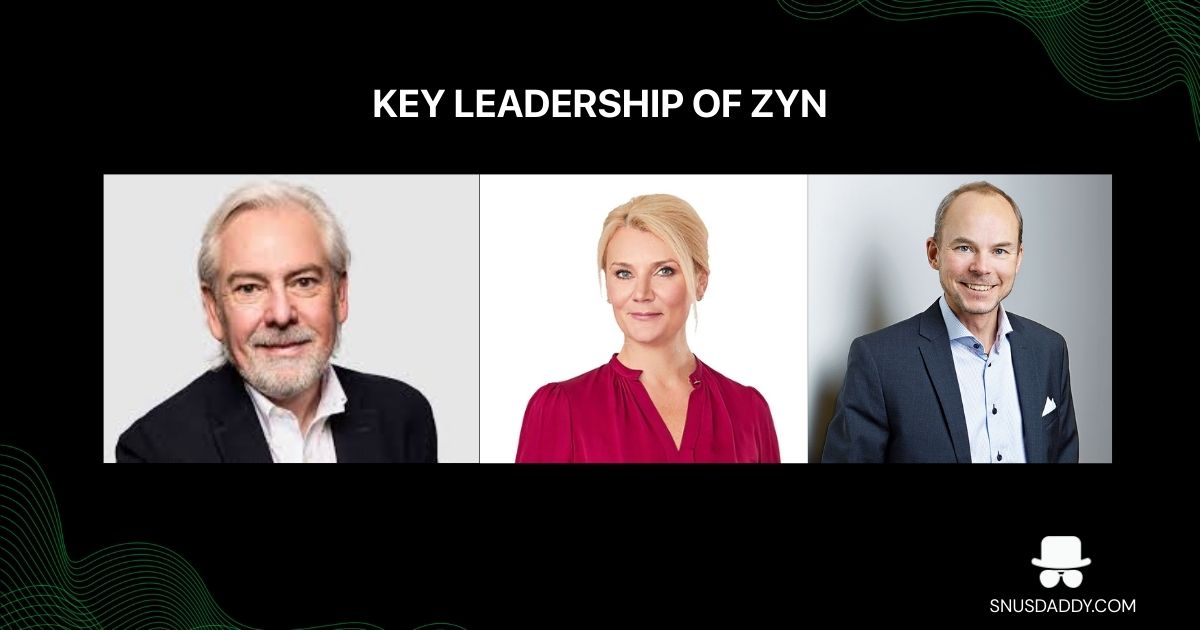
Jacek Olczak serves as CEO of Philip Morris International, which means he's got ultimate oversight of ZYN along with everything else in PMI's massive portfolio. He's the guy steering the entire smoke-free ship, and ZYN is currently his favorite passenger.
Stacey Kennedy is President of the Americas Region at PMI, which means she oversees ZYN's U.S. operations specifically. Given that the U.S. market is where ZYN absolutely dominates, this is not exactly a low-pressure job.
Lars Dahlgren serves as President of Swedish Match and manages ZYN's manufacturing and innovation. This is the leadership continuity part that actually matters, he was running things before the acquisition and he's still running things now, which is exactly what you want when a brand is working this well.
Management Continuity
Here's where it gets interesting. Philip Morris retained Swedish Match's executive team post-acquisition because, let's be honest, these are the people who turned ZYN into a billion dollar brand in the first place.
The brand continues operating from its U.S. headquarters in Richmond, Virginia, with manufacturing managed by Swedish Match's division using the same processes they've refined over decades.
Day-to-day ZYN operations remain under Swedish Match control, while strategic decisions about market expansion, regulatory strategy, and those big investments flow through PMI's Americas division.
This hybrid approach balances Swedish Match's 40+ years of nicotine pouch expertise with Philip Morris International's resources as the world's largest international tobacco company. In particular, PMI's resources allow ZYN to outspend competitors 3:1 on product development and marketing, which is the kind of financial muscle that turns market leadership into market monopoly.
It's kind of like how ZYN helped footballers and athletes maintain focus during high-pressure situations, except now the brand itself has the focus of a corporate giant behind it while keeping the Swedish craftsmanship that made it popular in the first place.
ZYN's Financial Impact & Stock Investment Options
Let's talk money, because the financial story behind ZYN is honestly wild. More than just a successful nicotine pouch brand, ZYN quite literally transformed Philip Morris International's entire business strategy and sent its stock price into the stratosphere.
How ZYN Transformed Philip Morris International
ZYN drove Philip Morris International's stock (NYSE: PM) to record highs in 2024 and 2025, which is pretty remarkable when you consider this is a company that's been around since the 1800s.
Smoke-free products like ZYN now represent 38% of PMI's total revenue, up from just 25% before the acquisition. That's not a small shift, that's a complete business transformation happening in real time.
ZYN's Business Metrics
Here's where the numbers get really interesting. ZYN's annual revenue sits at $2+ billion for 2024, with the brand's estimated valuation somewhere between $8-10 billion based on that massive U.S. nicotine pouch market share we keep mentioning (exact figured to be revealed later).
The market grew 80% year-over-year in the 2023-2024 period, and ZYN was basically responsible for most of that expansion. Philip Morris International invested $800+ million in production expansion during 2023 and 2024, which tells you everything you need to know about how much faith they have in this oral nicotine product's future.
Can You Buy ZYN Stock?
Here's the question everyone asks, and the answer is technically no, but actually yes, sort of. Let me explain.
You cannot buy "ZYN stock" directly because Swedish Match operates as a privately-held subsidiary within Philip Morris International. There's no ticker symbol for ZYN, no separate public company, no way to invest exclusively in the nicotine pouch brand itself.
But here's what you can do: Invest Through Philip Morris International (NYSE: PM).
PMI's stock reached all-time highs driven largely by ZYN's performance in the U.S. market, and the company's smoke-free segment (which ZYN leads) is projected to grow 15-20% annually through 2027. Philip Morris International pays quarterly dividends with a current yield hovering around 4.5%, so you're getting paid while you wait for ZYN to keep expanding.
Right now, ZYN represents roughly 15% of PMI's total revenue, which means you're not just betting and buying into a diversified tobacco giant that happens to own the hottest smoke-free product in America.
Investment Considerations
While ZYN is absolutely PMI's fastest-growing asset and the product everyone's excited about, Philip Morris International maintains a diversified portfolio that includes IQOS heated tobacco devices and traditional cigarettes in international markets where they're still profitable.
This diversification balances ZYN-specific regulatory risks, though the brand received a major vote of confidence in January 2025 when the FDA authorized 20 ZYN products in flavors like Cool Mint, Citrus, Coffee, and Wintergreen after an extensive scientific review. The nicotine pouch category overall is projected to grow 25-30% annually through 2028, which means ZYN is positioned at the center of one of the fastest-growing consumer product categories in the world.
The brand's popularity has even made ZYN a cultural phenomenon among celebrities, which further drives consumer interest and, let's be real, that market growth Wall Street loves so much.
Who Owns ZYN FAQs
Does Philip Morris ownership affect ZYN quality?
No. Swedish Match retained its leadership team and continues managing production using the same processes developed over 40+ years. Philip Morris provides financial and regulatory resources without changing the product formula.
Where is ZYN manufactured?
ZYN is produced at Swedish Match facilities in Gothenburg, Sweden and Owensboro/Madisonville, Kentucky. All facilities operate under identical ISO 9001 quality protocols.
Are ZYN products FDA authorized?
Yes, 20 ZYN products received FDA PMTA authorization in January 2025, including flavors like Cool Mint, Citrus, Coffee, and Wintergreen in both 3mg and 6mg strengths.
Is ZYN the same as snus?
No. While both come from Swedish Match, traditional snus contains tobacco, whereas ZYN is a tobacco-free nicotine pouch. Check out the complete world of ZYN to understand the full product ecosystem.
What This Means Going Forward
Philip Morris International's ownership of ZYN through Swedish Match is a signal that nicotine pouches are the future of the tobacco industry. With PMI's resources behind it, ZYN is positioned to expand into 80+ markets by 2026 while competitors scramble to keep up with a brand that already controls 70% of the U.S. market.
For users, this means continued product availability, consistent quality, and ongoing innovation.
If you're new to nicotine pouches, check out the best ZYN options for beginners or compare ZYN 3mg vs 6mg strengths to find your fit. For investors eyeing PMI stock on the NYSE, ZYN's growth trajectory suggests the brand will remain the company's most exciting asset for years to come.
